
Historical Background
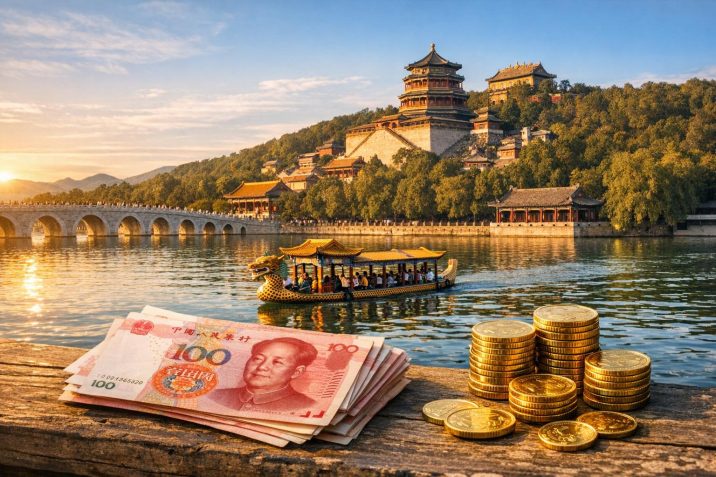
The Summer Palace, located in the Haidian District of Beijing, is one of the most extensive and best-preserved imperial garden complexes in China. Known in Chinese as Yiheyuan, meaning “Garden of Preserving Harmony,” it represents the culmination of classical Chinese garden design refined over successive dynasties. Although the present layout largely reflects Qing Dynasty planning, the site’s history extends back several centuries before its formal designation as the Summer Palace.
During the Jin Dynasty in the 12th century, the area was valued for its natural springs and scenic landscape. Early rulers constructed palatial estates and water management systems, establishing the region as a retreat from the political center of the capital. In the Yuan Dynasty, the site became integrated into the broader imperial city planning of Dadu, the predecessor of modern Beijing. Waterworks constructed during this period laid foundations for the expansive lake system that would later define the Summer Palace.
The transformation of the site into a grand imperial garden occurred during the Qing Dynasty. In 1750, the Qianlong Emperor ordered the construction of a vast palace complex to commemorate his mother’s 60th birthday. The project reflected not only filial devotion, a central Confucian virtue, but also the emperor’s desire to demonstrate political stability and cultural refinement. The garden was initially named the Garden of Clear Ripples (Qingyiyuan). Engineers enlarged Kunming Lake and used the excavated soil to build Longevity Hill, thereby shaping a carefully orchestrated topography. The project required coordinated labor from thousands of workers, artisans, and engineers.
The palace suffered extensive destruction in 1860 during the Second Opium War, when Anglo-French forces entered Beijing and looted imperial properties. Many buildings were burned, artworks were removed, and gardens were damaged. Reconstruction began decades later under Empress Dowager Cixi, who in 1888 directed court resources toward rebuilding the complex. Renamed the Summer Palace, it became her principal residence and political base. The funding of this reconstruction has been widely discussed in historical scholarship, particularly in relation to military reform initiatives of the late Qing period.
In 1900, during the Boxer Rebellion, the complex again experienced military occupation and damage inflicted by foreign troops. Subsequent repairs in the early 20th century aimed to restore essential structures while adapting the site for changing political conditions. After the fall of the Qing Dynasty in 1911, the palace ceased to function as an exclusive imperial residence. In 1924 it was opened to the public, marking its transformation into a shared cultural space. In 1998, international recognition came when it was designated a UNESCO World Heritage Site, acknowledging its architectural, historical, and artistic value.
Geographical Layout and Design Principles
The Summer Palace occupies approximately 2.9 square kilometers, with water covering nearly three-quarters of its area. The landscape centers on Longevity Hill and Kunming Lake, a pairing that reflects essential principles of Chinese geomancy and landscape composition. Rather than imposing rigid geometry, designers sought to create a setting that conveyed natural spontaneity while remaining carefully controlled.
Kunming Lake forms the visual and spatial foundation of the complex. Modeled in part after West Lake in Hangzhou, it features irregular shorelines that create the impression of natural formation. Designers incorporated three islands within the lake, symbolizing the Daoist Isles of the Immortals. This motif represented the pursuit of longevity and spiritual transcendence, themes closely associated with imperial authority. Causeways divide the lake into varied scenic zones, allowing shifting perspectives as visitors move through the grounds.
Longevity Hill rises approximately 60 meters above the lake. Artificially enhanced through the redistribution of excavated soil, it provides elevation and architectural focus. Buildings ascend the slope along a central north–south axis, a configuration reminiscent of the Forbidden City’s hierarchical layout. However, unlike the rigid symmetry of urban palaces, the arrangement here integrates pathways and subsidiary structures that branch outward to frame natural views.
The concept of borrowed scenery, known as jiejing, guided the placement of pavilions and windows. Designers oriented structures to capture distant mountains and integrate them into the visual composition. Adjustments to perspective, achieved through curved walkways and staggered elevations, encouraged gradual revelation of space. This method aligns with traditional painting theory, in which landscapes unfold sequentially rather than appearing in a single panoramic view.
Architectural Features
The Summer Palace contains more than 3,000 recorded structures, ranging from grand halls to modest pavilions. These buildings serve administrative, residential, religious, and recreational purposes. Timber frameworks dominate construction, supported by stone foundations and topped with tiled roofs whose colors and decorative figures denote status.
The Hall of Benevolence and Longevity
The Hall of Benevolence and Longevity (Renshou Dian) functioned as the principal administrative hall. Here the emperor, and later Empress Dowager Cixi, received officials and issued edicts. The hall stands on a raised stone platform to signify authority. Its roof features glazed tiles, and ridge decorations include symbolic creatures arranged according to strict hierarchical rules. In the courtyard, a bronze qilin represents justice and moral governance, reinforcing Confucian ideals embedded in imperial rulership.
The Long Corridor
The Long Corridor (Chang Lang) extends approximately 728 meters along the northern shore of Kunming Lake. Supported by hundreds of painted beams, it connects key buildings at the base of Longevity Hill. Painted panels depict scenes drawn from classical novels such as Dream of the Red Chamber and Romance of the Three Kingdoms. The corridor serves practical and aesthetic functions, providing shelter from weather while displaying narrative imagery that educates and reinforces cultural continuity.
The Tower of Buddhist Incense
The Tower of Buddhist Incense (Foxiang Ge) stands prominently above the hillside on a high stone terrace. Its multi-eaved roof and commanding elevation mark it as a central religious structure. Ceremonies conducted here reflected the Qing court’s patronage of Tibetan Buddhism, a strategic and spiritual affiliation that strengthened imperial relations with frontier regions. From the tower, expansive views across Kunming Lake underscore the link between spiritual authority and physical oversight of the landscape.
The Marble Boat
The Marble Boat, also known as the Boat of Purity and Ease, rests along the lake’s edge. Constructed primarily of stone, it resembles a paddle steamer, incorporating certain Western decorative elements added during its late 19th-century reconstruction. The boat does not move; its symbolic meaning lies in steadfastness. In traditional political metaphor, the state is compared to a boat supported by the people as water. A stone vessel suggests stability amid change.
The Seventeen-Arch Bridge
The Seventeen-Arch Bridge spans the water to connect Nanhu Island with the eastern shore. Measuring about 150 meters, it stands as the largest bridge in the complex. Stone lions line its balustrades, each carved with subtle distinctions. The numerical choice of seventeen reflects symbolic associations with imperial numerology. The bridge’s gentle arc achieves both structural stability and visual rhythm, especially when reflected in the lake.
Symbolism and Cultural Significance
Symbolism permeates the Summer Palace’s design. The emperor’s role as mediator between heaven and earth is expressed through axial planning and elevated religious structures. Architectural placement communicates political order, while decorative motifs reinforce cosmological associations.
The pairing of mountain and water represents the complementary forces of yin and yang. Mountains signify stability and authority, while water embodies adaptability and nourishment. Their balanced coexistence within the garden communicates the ideal of harmonious governance. These ideas derive from classical texts and were incorporated into state ideology.
Filial piety forms another layer of meaning. The original dedication to the Qianlong Emperor’s mother illustrates the integration of personal virtue into public architecture. Later occupation by Empress Dowager Cixi added new political context, as the palace became a venue through which she exercised authority during a time of internal rebellion and foreign pressure.
Gardens and Natural Elements
Vegetation plays a defining role in shaping spatial experience. Willow trees line the lake’s edges, their branches softening architectural outlines. Pine and cypress provide evergreen contrast, symbolizing endurance. Seasonal flowers introduce cyclical variation, ensuring continuous visual change throughout the year.
Rock formations contribute to the simulation of mountainous terrain. Taihu stones, prized for their perforated surfaces, appear in carefully arranged clusters. These rocks were traditionally appreciated for qualities resembling miniature landscapes. Garden designers positioned them to guide movement and frame vistas, maintaining continuity with literati garden traditions of earlier dynasties.
Suzhou Street, located behind Longevity Hill, recreates a commercial canal town. Palace attendants once enacted shopkeeping roles to simulate urban life for the court. The reconstructed street offers insight into Qing-era architectural vernacular and demonstrates how the imperial environment incorporated representations of broader society within controlled boundaries.
Political Context and Late Qing Reform
In the late 19th century, the Summer Palace assumed a renewed political role. After regaining influence in 1889, Empress Dowager Cixi governed from the palace for extended periods. While the Forbidden City retained ceremonial primacy, daily governance often unfolded within the more secluded lakeside environment.
Debate persists regarding the reallocation of naval funds for reconstruction. Some historians argue that resources designated for maritime defense were redirected to palace building, highlighting tensions between modernization and traditional priorities. Regardless of interpretation, the palace became associated with the complexities of reform efforts during the Qing Dynasty’s final decades.
Following the 1911 Revolution, the imperial household retained limited access until political shifts led to broader public management. The site’s adaptation to public use reflects China’s changing governance structures in the transition from empire to republic.
Artistic Decoration
Decorative programs across the Summer Palace demonstrate technical refinement. Painted brackets and ceiling panels feature dragons and phoenixes, symbols of imperial authority and balanced partnership. Color schemes adhere to regulated patterns, with yellow tiles signifying imperial status.
Inside halls, carved screens and lacquer surfaces display intricate craftsmanship. Porcelain vessels and bronze incense burners complement architectural forms. Although periods of conflict resulted in loss, conservation teams have restored many decorative elements using archival references and surviving examples.
Calligraphic plaques bearing inscriptions by the Qianlong Emperor remain visible throughout the grounds. These inscriptions document imperial presence and literary accomplishment. Poetry engraved on stone steles amplifies the intellectual dimension of the landscape.
Engineering and Construction Techniques
Hydraulic engineering shaped Kunming Lake and ensured sustainable water levels. Channels connecting to nearby rivers regulate inflow and outflow. The lake also contributes to flood mitigation and irrigation for the surrounding region.
Timber-frame structures employ the dougong bracket system, allowing roofs to rest securely while distributing weight. Interlocking joints provide flexibility during seismic activity. Stone embankments and bridge piers rely on precise masonry techniques that have supported heavy loads for centuries.
Religious Influences
Religious architecture within the Summer Palace underscores the Qing Dynasty’s multicultural governance. Tibetan Buddhist motifs, visible in temples and pagodas, reflect alliances with Mongolian and Tibetan communities. The Sea of Wisdom Temple (Zhihui Hai) incorporates glazed tiles depicting Buddhist figures, constructed in brick and stone to resist fire.
Rituals performed in these structures sought to secure state prosperity and spiritual legitimacy. The integration of religious practice into the garden environment demonstrates the inseparability of governance and belief within imperial tradition.
Modern Preservation and Tourism
Since the mid-20th century, systematic preservation initiatives have stabilized vulnerable structures and restored decorative surfaces. Conservation specialists employ traditional pigments and carpentry techniques to maintain authenticity while integrating modern monitoring technologies.
The Summer Palace functions today as both historical monument and public park. Visitor pathways are regulated to reduce structural wear, and interpretive materials provide multilingual explanations. Academic research conducted on-site contributes to understanding Qing architecture, hydraulic systems, and landscape theory.
Comparative Significance
Within China, the Summer Palace represents a mature synthesis of imperial garden design. While the Old Summer Palace remains largely in ruin, Yiheyuan retains structural continuity that allows comprehensive study. Its preservation offers insight into late imperial aesthetics and technical skill.
Comparison with European royal estates such as Versailles reveals distinct philosophies. European gardens often emphasize geometric symmetry and centralized visual control. In contrast, the Summer Palace relies on asymmetrical balance and scenic progression. These differences illustrate divergent understandings of authority, nature, and representation.
Conclusion
The Summer Palace stands as an enduring example of Qing Dynasty landscape architecture, engineering, and political symbolism. Over centuries, it has experienced cycles of construction, destruction, and restoration. Its gardens, halls, bridges, and temples collectively express principles drawn from Confucian ethics, Daoist cosmology, and Buddhist spirituality.
Today, as a protected cultural heritage site, the complex provides opportunities for scholarly study and public engagement. Through continued conservation, the Summer Palace remains a substantial record of imperial design and a resource for understanding the historical relationship between architecture, environment, and governance in China.
