
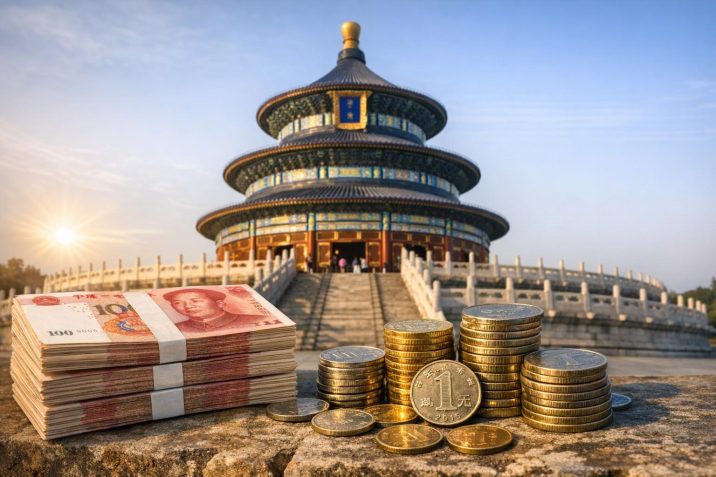
The Temple of Heaven is a large imperial religious complex located in the southeastern part of central Beijing, China. Constructed in the early fifteenth century during the Ming dynasty, it served as the primary site where emperors performed solemn rituals to honor Heaven and pray for good harvests. The complex reflects the cosmological principles, political theory, and ritual practices that shaped imperial China for centuries. Recognized as a UNESCO World Heritage Site in 1998, the Temple of Heaven remains one of the most significant surviving examples of traditional Chinese imperial architecture and ceremonial planning.
Historical Background
The Temple of Heaven was first constructed between 1406 and 1420 during the reign of the Yongle Emperor of the Ming dynasty. This period marked a decisive transformation in the political geography of China. The Yongle Emperor moved the imperial capital from Nanjing to Beijing, initiating an ambitious building program that included the construction of the Forbidden City, defensive walls, altars, and ceremonial compounds. The Temple of Heaven formed an essential component of this broader urban design, conceived according to established cosmological doctrines and ritual requirements.
In imperial political theory, the emperor ruled under the concept of the Mandate of Heaven. Heaven, understood not as a personal deity but as a supreme moral force, granted authority to a virtuous ruler and withdrew it from a corrupt or ineffective one. The emperor was therefore styled the Son of Heaven, a title emphasizing his intermediary position between cosmic order and earthly affairs. Natural calamities such as droughts, floods, earthquakes, or widespread famine were often interpreted as signs that Heaven was dissatisfied with the ruler. In this ideological framework, rituals were not peripheral displays but central mechanisms of governance.
The Temple of Heaven became the most important sacrificial site dedicated to Heaven in the empire. While earlier dynasties had maintained similar altars in previous capitals, the Ming and Qing versions in Beijing represented the culmination of centuries of ritual codification. From the fifteenth century until the fall of the Qing dynasty in 1911, emperors traveled annually from the Forbidden City to this sacred site to perform prescribed ceremonies. These rituals were regulated in detailed official texts specifying offerings, music, clothing, choreography, and liturgical language.
The complex underwent modifications during the Ming and Qing periods. The Jiajing Emperor in the sixteenth century played a notable role in refining the ritual system and reconstructing parts of the compound, including the Circular Mound Altar. Later Qing emperors maintained the buildings, rebuilding damaged structures and preserving ceremonial traditions until the very end of imperial rule. Over nearly five centuries, the Temple of Heaven functioned as an institutional center of state ritual.
Cosmological Framework and Political Philosophy
The architectural form of the Temple of Heaven cannot be understood apart from traditional Chinese cosmology. Classical texts described the universe as structured through dynamic relationships between Heaven, Earth, and humanity. Heaven was associated with roundness, movement, and the celestial sphere, while Earth was linked to square forms and stability. The emperor stood at the intersection of these realms, tasked with maintaining equilibrium through ritual, moral conduct, and administrative competence.
The layout of the complex embodies the ancient notion of “round Heaven and square Earth.” Major altars and halls are circular, symbolizing celestial perfection, while enclosure walls and surrounding courtyards incorporate rectilinear geometry associated with terrestrial order. The northern section of the outer wall is rounded, and the southern section is square, creating a large-scale expression of cosmological duality. This arrangement was not decorative but doctrinal, reinforcing the emperor’s responsibility as mediator.
Numerical symbolism further reinforces this cosmological framework. The number nine held particular importance because it represented the highest single-digit yang number and was associated with imperial authority. Platforms contain multiples of nine stone slabs, staircases contain nine steps or increments thereof, and balustrades are arranged in patterns reflecting this auspicious number. Calendrical symbolism also appears, linking architectural space to the agricultural cycle and the passage of time. Through these measures, the entire site becomes a spatial diagram of cosmic principles.
Urban Context and Spatial Organization
The Temple of Heaven occupies approximately 273 hectares, making it significantly larger than the Forbidden City. Its expansive scale reflects both practical and symbolic considerations. Practically, imperial rituals required the movement of officials, musicians, sacrificial animals, and ceremonial equipment. Symbolically, the open grounds created a zone of separation from ordinary urban life.
The compound is divided into an inner altar area containing the principal ceremonial structures and an outer area characterized by ancient cypress groves and subsidiary buildings. The cypress trees, many of which date back several centuries, form a dense canopy that establishes a sense of enclosure despite the site’s large dimensions. In traditional Chinese thought, evergreen trees signified endurance and continuity, attributes appropriate for a ritual complex associated with dynastic stability.
An elevated pathway known as the Vermilion Steps Bridge, also referred to as the Sacred Way, links the Hall of Prayer for Good Harvests in the north to the Circular Mound Altar in the south. This raised walkway allowed the emperor to process through the complex in a ritually prescribed manner. Its elevation signified hierarchical distinction, ensuring that the Son of Heaven remained symbolically elevated above attendants and earthly terrain. The path creates a strong north–south axis that organizes movement and dictates the ceremonial sequence.
Hall of Prayer for Good Harvests
The Hall of Prayer for Good Harvests stands as the most recognizable structure within the Temple of Heaven complex. Originally completed in 1420, it was rebuilt after a fire caused by lightning in 1889. The present building reflects late Qing reconstruction while preserving Ming design principles.
This circular wooden hall rises above a three-tiered marble terrace. Its roof is covered with deep blue glazed tiles, a departure from the yellow tiles used in most imperial palaces. Blue symbolizes the sky and reinforces the hall’s dedication to Heaven. The roof features a triple-gabled structure crowned with a gilded finial, combining visual prominence with ritual symbolism.
A notable architectural achievement is the absence of nails in the main timber framework. Instead, craftsmen employed sophisticated joinery techniques characteristic of traditional Chinese construction. Interlocking wooden components create a stable yet flexible structure capable of withstanding seismic activity. The use of layered dougong bracket sets distributes weight downward to the columns and allows for wide interior spans without load-bearing walls.
The hall contains twenty-eight large pillars arranged in concentric rings. The four central pillars symbolize the four seasons; twelve inner columns correspond to the twelve months; and twelve outer columns represent the twelve traditional two-hour divisions of the day. Together these elements integrate calendrical time into architectural structure. The emperor, standing within this framework, was symbolically positioned at the center of temporal and cosmic cycles.
During the annual prayer ceremony for good harvests, the emperor would offer sacrifices that included grain, silk, jade, and animals. Ritual vessels were arranged according to strict protocol. Court musicians performed compositions reserved exclusively for this occasion, and participating officials wore designated ceremonial garments. Every action was choreographed to conform to classical prescriptions, underscoring that the ceremony was a matter of state governance rather than private devotion.
Imperial Vault of Heaven and the Echo Wall
South of the Hall of Prayer for Good Harvests lies the Imperial Vault of Heaven. This smaller circular building housed spirit tablets representing Heaven and other deities invoked during rituals. These tablets were transferred to the main altar during major ceremonies and then returned to the vault afterward.
The building’s design echoes that of the larger hall, featuring a circular plan and blue-tiled roof. It rests on a single-tier marble platform enclosed by finely carved balustrades. Despite its more modest scale, the structure served a vital preparatory role within the ritual sequence, ensuring the proper safeguarding of sacred objects.
Encircling the Imperial Vault is the Echo Wall, a smooth circular wall constructed with remarkable precision. The curvature and density of the masonry allow sound waves to travel along its surface. A voice spoken softly at one point can be heard clearly at another, provided environmental noise is limited. While this acoustic phenomenon attracts modern visitors, it also reflects the advanced understanding of materials and geometry achieved by Ming craftsmen.
The Circular Mound Altar
The Circular Mound Altar, situated at the southern end of the axis, functioned primarily as the site of the Winter Solstice ceremony. Originally constructed in 1530 and later renovated, the altar consists of three concentric circular terraces made of white marble. Each terrace is enclosed by balustrades carved with cloud and dragon motifs, reinforcing associations with Heaven and imperial sovereignty.
The number nine shapes the altar’s design. The top platform contains nine concentric rings of stone slabs, and staircases leading to each terrace are arranged in multiples of nine. These repetitions affirm the emperor’s supreme position within the cosmic hierarchy.
At the center of the uppermost terrace lies the Heavenly Center Stone. During the Winter Solstice ceremony, the emperor stood upon this stone while presenting offerings and reciting prayers. The circular, open-air configuration symbolized direct engagement with the sky above. Unlike enclosed halls, this altar exposed participants to the elements, aligning the ritual moment with the turning of the seasonal cycle.
The altar’s acoustics amplify sound when spoken from the center, due to the symmetrical arrangement of balustrades and paving stones. This effect enhanced the clarity of chants and proclamations during ceremonies, contributing to the solemn atmosphere prescribed by ritual manuals.
The Palace of Abstinence
Before major ceremonies, the emperor underwent a period of purification in the Palace of Abstinence, located within the western section of the complex. This compound includes sleeping quarters, halls, and courtyards enclosed by defensive walls and a surrounding moat. For several days prior to the ritual, the emperor refrained from certain foods and activities, reviewed ritual texts, and prepared mentally for the upcoming ceremony.
This phase emphasized the moral dimension of rulership. Proper ritual performance required not only outward precision but also inner discipline. By observing abstinence, the emperor demonstrated self-control and reverence for Heaven, reinforcing the ethical basis of his authority.
Ritual Music, Offerings, and Court Participation
State ceremonies at the Temple of Heaven incorporated an elaborate system of ritual music known as yayue, or elegant music. Ensembles performed with bronze bells, stone chimes, drums, flutes, and zithers arranged according to classical prescriptions. Musical compositions were linked to specific sacrificial sequences, and tempo changes corresponded to stages of offering and prayer.
Sacrificial animals, typically oxen, were prepared in advance according to strict procedures. Grain offerings symbolized agricultural abundance, while jade and silk represented purity and refinement. Incense smoke rising from bronze burners created a visual metaphor for communication between the earthly and celestial realms.
Although many high-ranking officials attended, the emperor alone performed the central acts of kneeling, bowing, and reading prayers. This exclusivity reinforced the doctrine that only the Son of Heaven possessed the authority to address Heaven on behalf of the empire. Through ceremony, political hierarchy was reaffirmed in visible and audible form.
Architectural Craftsmanship and Decorative Programs
The construction techniques employed at the Temple of Heaven reflect advanced craftsmanship. Timber frames rest on stone platforms to protect wood from ground moisture. Bracket sets distribute roof weight while allowing the broad overhangs characteristic of traditional Chinese architecture. Painted beams and ceilings display motifs of dragons, phoenixes, and cloud scrolls rendered in mineral pigments.
White marble terraces are carved with relief designs representing waves, clouds, and mythological creatures. Dragon imagery signifies imperial authority, whereas cloud patterns evoke the celestial realm. The integration of structural necessity and symbolic decoration demonstrates the unity between engineering and ideology in imperial building practice.
The consistent use of blue glazed tiles differentiates the Temple of Heaven from residential or administrative palaces. The chromatic scheme communicates the site’s exclusive dedication to Heaven, visually distinguishing it within Beijing’s architectural landscape.
Transformation in the Twentieth Century
The abdication of the last Qing emperor in 1912 ended imperial ritual at the Temple of Heaven. The complex was subsequently converted into a public park in 1918. This transformation marked a shift from exclusive dynastic use to civic accessibility. While some periods of political turbulence led to neglect or minor damage, preservation initiatives in the later twentieth century restored key structures.
Recognition as a World Heritage Site in 1998 affirmed the complex’s global significance. Conservation projects have focused on stabilizing timber frameworks, restoring painted decoration, and monitoring environmental conditions. Specialists employ traditional carpentry methods where possible, ensuring continuity with historical techniques.
Contemporary Use and Cultural Role
Today, the Temple of Heaven functions both as a historical monument and as an active urban park. Residents gather in the mornings to practice tai chi, rehearse traditional music, play chess, and engage in calligraphy on paved surfaces using water brushes. These activities coexist with the preserved ceremonial structures, creating a layered environment in which imperial heritage intersects with daily life.
Although imperial sacrifices are no longer performed, the site continues to convey the intellectual foundations of traditional Chinese governance. Visitors encounter a carefully ordered landscape in which architectural form, numerical symbolism, and cosmology merge into a coherent spatial expression.
Relationship to Other Imperial Altars
The Temple of Heaven formed part of a network of state altars in Beijing dedicated to Earth, the Sun, the Moon, and agriculture. These sites were positioned according to directional correspondences derived from classical cosmology. The Temple of Heaven occupied the southern sector, consistent with the traditional association of Heaven with the south and with yang energy.
In contrast to the dense courtyards of the Forbidden City, the Temple of Heaven emphasizes open terraces and expansive skies. The comparison reveals complementary aspects of imperial authority: administrative control within palace walls and ritual mediation in open sacred space. Together, these environments articulated a comprehensive vision of rulership grounded in both political administration and cosmic responsibility.
Conservation Challenges and Future Prospects
Ongoing preservation of the Temple of Heaven requires continuous attention to environmental pressures. Fluctuations in temperature and humidity affect timber stability, while air pollution can accelerate deterioration of painted surfaces and stone carvings. Conservation teams monitor structural movement and employ preventive treatments against insects and rot.
Visitor management strategies regulate access to sensitive areas, balancing public engagement with protection of historic fabric. International collaboration contributes technical expertise in materials science and heritage management. Through these efforts, the Temple of Heaven remains both accessible and safeguarded.
Conclusion
The Temple of Heaven represents a synthesis of architecture, cosmology, ritual, and political doctrine developed over centuries of imperial rule. Established in the early fifteenth century and maintained until the twentieth, it functioned as the ceremonial heart of the Chinese state. Its circular altars, symbolic numbers, axial pathways, and carefully proportioned halls express a worldview in which governance and cosmic order were inseparable.
Although its original sacrificial function ended with the fall of the monarchy, the complex continues to offer insight into the principles that underpinned traditional Chinese political culture. As a preserved architectural ensemble, it provides material evidence of how cosmological belief shaped urban planning and ceremonial life. The Temple of Heaven endures as a structured landscape in which ideology, craftsmanship, and ritual practice converge in built form.
