
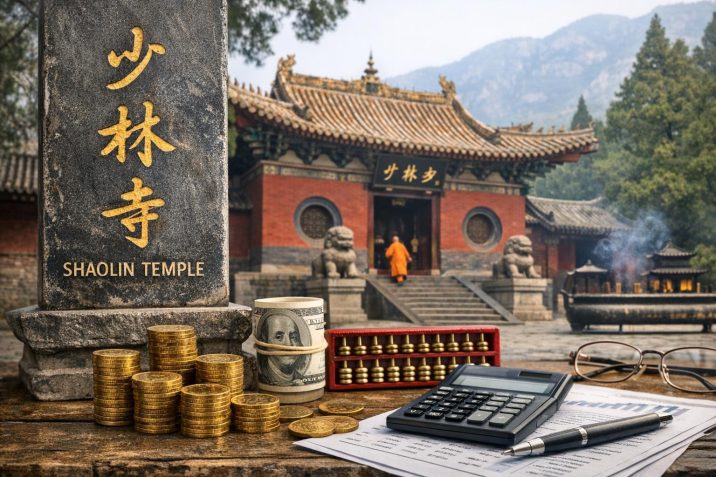
The Shaolin Temple is one of the most widely recognized Buddhist monasteries in the world. Located on the western side of Mount Song in Henan Province, China, it has been associated for centuries with Chan Buddhism and Chinese martial traditions. The temple’s historical development reflects broader patterns in Chinese religious life, military history, architecture, and cultural exchange. Although popular culture frequently highlights dramatic legends and martial arts narratives, the historical Shaolin Temple represents a complex religious institution shaped by imperial patronage, regional conflict, monastic reform, and modern tourism.
Geographic and Historical Setting
The Shaolin Temple stands on Mount Song, one of the Five Great Mountains of China. These mountains have held ritual and cosmological significance since antiquity. Mount Song’s central location within the North China Plain contributed to its prominence in early Chinese state formation. Dengfeng County, where the temple is situated, lies near several ancient capitals, including Luoyang and Kaifeng. As a result, the region frequently intersected with political authority, economic life, and religious development.
The temple’s founding is traditionally dated to 495 CE during the Northern Wei dynasty. Historical sources indicate that Emperor Xiaowen supported the establishment of a monastery to accommodate an Indian monk named Batuo (Fotuo). Batuo is regarded as Shaolin’s first patriarch. His presence reflects the broader transmission of Buddhism into China via overland Silk Road networks linking Central Asia and northern China. During this period, the Northern Wei court actively promoted Buddhism as part of its statecraft, sponsoring temples and translation efforts.
The name “Shaolin” is often interpreted as “Young Forest,” referring to the wooded foothills below Mount Song’s Shaoshi Peak. From its inception, the monastery occupied a landscape already imbued with sacred associations, blending imported Buddhist traditions with indigenous understandings of mountains as sites of spiritual cultivation.
Early Monastic Formation
During the Northern Wei and subsequent dynasties, Buddhist monasteries developed structured administrative systems. Shaolin was no exception. Like other major monasteries, it relied on land grants, donations, and imperial protection. Monks followed vinaya regulations governing conduct, ordination, food, dress, and communal hierarchy.
In the centuries after its founding, Shaolin’s institutional identity evolved. Buddhist schools in China were diverse, and doctrinal debates were common. Over time, Shaolin became strongly associated with meditation practice, scriptural exegesis, and lineage transmission. Surviving inscriptions suggest that the temple maintained scholarly as well as spiritual functions, participating in networks of learned monks who traveled between major religious centers.
Despite popular emphasis on martial activities, early Shaolin was principally concerned with religious life. Chanting, meditation, ritual observance, and textual study defined daily monastic rhythms. As with other monasteries, relations with the state could fluctuate. Some emperors extended patronage, while others implemented restrictions, particularly during periods of fiscal strain or ideological reform.
Association with Chan Buddhism
Shaolin Temple became especially linked with Chan Buddhism, known in Japan as Zen. Chan emphasizes meditation (chan meaning “meditation,” derived from the Sanskrit dhyāna), direct experiential insight, and transmission of understanding from teacher to disciple. Rather than focusing primarily on elaborate rituals or doctrinal analysis, Chan practitioners sought awakening through disciplined contemplation and engagement with paradoxical teachings.
According to later tradition, an Indian monk named Bodhidharma arrived in China in the early sixth century and eventually resided at Shaolin. He is said to have meditated in a cave near the monastery for nine years, facing a wall. While historical records about Bodhidharma are sparse and sometimes contradictory, his symbolic association with Shaolin became central to the temple’s identity. The cave attributed to his retreat remains an important site of pilgrimage.
Scholars generally agree that although Bodhidharma likely existed, many stories about his activities took shape centuries after his lifetime. These narratives helped legitimize Chan’s claim to a distinct lineage tracing back to India. Shaolin’s linkage to this founding figure reinforced its position within the broader Chan tradition.
During the Tang dynasty, Chan schools consolidated institutional structures and gained imperial recognition. Monasteries associated with prominent teachers developed reputations that attracted disciples from across China. Shaolin participated in this movement, though it was one center among several.
Monastic Discipline and Institutional Governance
The daily life of Shaolin monks historically followed established Buddhist codes. Ordination required formal vows, adherence to celibacy, communal living, and obedience within hierarchical structures. Monastic officers oversaw finance, ritual affairs, and discipline. Revenues derived from landholdings, donations, state stipends, and sometimes agricultural production managed by lay tenants.
Administrative records from later dynasties show that Shaolin controlled substantial acreage. Managing these resources required negotiation with local authorities and defense against encroachment. Such responsibilities contributed indirectly to the monastery’s involvement in armed activity, especially during unstable political conditions.
The governance of Shaolin shifted over centuries depending on imperial policies. Some dynasties strengthened oversight of Buddhist institutions, registering monks and limiting landholdings. Others permitted relative autonomy. These oscillations shaped Shaolin’s ability to maintain continuity across turbulent eras.
Early Military Involvement
The association between Shaolin and martial activity appears in sources from the Tang dynasty (618–907). A stele inscription from 728 CE records that Shaolin monks aided Li Shimin, the future Emperor Taizong, during conflicts that led to the establishment of the Tang dynasty. Although details remain debated, it is plausible that monks provided localized military assistance.
This participation was not entirely anomalous. In medieval China, monasteries often maintained private estates vulnerable to banditry. Defensive organization could become necessary, particularly when central authority weakened. Shaolin’s strategic position near important routes may have heightened its exposure to conflict.
Imperial reward following military assistance reportedly included expanded land rights and recognition. Such privileges reinforced Shaolin’s institutional security. Inscriptions and official documents suggest that military engagement brought tangible benefits, consolidating the monastery’s estate.
Development of Shaolin Martial Arts
Shaolin martial arts, commonly referred to as Shaolin Kung Fu, developed gradually. They did not originate in a single episode or from a single teacher. Instead, they reflect centuries of adaptation, drawing from military training methods, regional combat systems, and monastic organization.
By the Ming dynasty (1368–1644), textual evidence clearly connects Shaolin monks to structured martial training. General Qi Jiguang’s military manual, the Ji Xiao Xin Shu, discusses staff techniques linked to Shaolin practice. While historians debate the extent of direct borrowing, the documentation confirms Shaolin’s recognized competence in martial disciplines during this period.
Staff fighting became particularly associated with the temple. The staff, as a relatively simple weapon, held symbolic significance and practical value. Over time, curricula expanded to include empty-hand boxing forms and a variety of other weapons. Training emphasized coordination, endurance, and technical precision.
The relationship between Buddhist precepts and martial practice has long been examined. Buddhist teachings generally discourage taking life; however, monastic commentators frequently justified martial preparation as a means of self-defense and protection of the community. In this interpretation, controlled force used defensively did not contradict spiritual aims. Debate on this question continues among scholars and practitioners.
Architectural Layout and Sacred Landscape
The main temple compound follows a traditional north-south axis. Successive halls serve ritual and commemorative purposes. Rebuilding after destruction has altered specific structures, yet the general layout reflects conventional Chinese monastic planning. Gates, courtyards, and halls guide movement through progressively sacred spaces.
The Pagoda Forest is among Shaolin’s most distinctive features. This cemetery complex contains over 200 pagodas dating from the Tang dynasty onward. Each pagoda functions as a memorial stupa for a deceased monk or abbot. Variations in height, decorative relief, and structural design provide a visual record of changing architectural preferences across centuries.
In addition to built structures, the surrounding terrain contributes to the temple’s religious meaning. Mountain peaks, wooded slopes, and nearby caves create a contemplative environment consistent with Chan ideals of retreat and meditation. Integration between architecture and natural landscape reflects broader Chinese aesthetic values emphasizing harmony between built and natural forms.
Destruction and Reconstruction
Throughout its history, the Shaolin Temple has undergone repeated cycles of damage and renewal. Warfare during dynastic transitions frequently endangered religious institutions. In the late Ming and early Qing periods, large-scale conflict in central China disrupted monastic life.
A particularly destructive event occurred in 1928 when warlord Shi Yousan ordered the temple burned. The resulting fire lasted for weeks, destroying halls, scriptures, and archival materials. The loss of manuscripts has hindered efforts to reconstruct certain aspects of Shaolin’s early history.
During the Cultural Revolution (1966–1976), religious activity across China faced severe restrictions. Monks were dispersed, and temple properties were neglected or repurposed. Only after policy changes in the late 1970s did systematic restoration begin. Reconstruction required archival research, architectural planning, and coordination between religious authorities and state agencies.
Modern Restoration and Institutional Reform
Since the 1980s, the Shaolin Temple has experienced significant revival. Cultural heritage initiatives supported rebuilding projects and conservation of the Pagoda Forest. The resurgence of interest in traditional martial arts, amplified by film and television portrayals, attracted domestic and international visitors.
The temple functions under the supervision of Chinese Buddhist associations while maintaining internal monastic leadership. The current abbot has emphasized cultural outreach, organizing international tours and establishing training centers abroad. These initiatives seek to position Shaolin as both a religious community and a representative of Chinese cultural heritage.
Tourism constitutes a major component of the local economy. Demonstrations of martial arts are held regularly for visitors. Adjacent to the monastery are numerous martial arts schools, some independent and others affiliated. While these institutions promote physical training, they operate separately from the strictly religious life of ordained monks.
Commercialization has generated discussion regarding the balance between economic sustainability and spiritual integrity. Managing visitor flow, infrastructure, and preservation requires careful planning. Official information regarding visiting hours, ticketing, and heritage guidelines is available through regional tourism resources such as Henan’s provincial tourism portal, which outlines conservation policies for major cultural sites.
Shaolin in International Perspective
The global image of Shaolin has expanded considerably in the twentieth and twenty-first centuries. Martial arts cinema, literature, and stage performances have portrayed the temple as the archetypal source of kung fu. While such portrayals simplify historical realities, they have contributed to international awareness of Chinese martial culture.
Migration patterns further disseminated Shaolin-associated practices. In diaspora communities, teachers claimed lineage connections to the temple, sometimes directly and sometimes symbolically. The name “Shaolin” came to represent authenticity and discipline, even in contexts far removed from Henan.
Modern competitive wushu, standardized in the People’s Republic of China, incorporates movements inspired by traditional routines but adapted for athletic demonstration. Acrobatics, codified scoring systems, and choreographed sequences characterize this modern format. Though distinct from historical combat training, it draws legitimacy in part from association with venerable institutions such as Shaolin.
Religious Practice in the Contemporary Era
Despite high public visibility of martial arts, Shaolin remains a functioning Buddhist monastery. Monks observe ritual chanting, meditation sessions, and scriptural study. Ordination procedures comply with national religious regulations. The temple participates in conferences and exchanges with other Buddhist communities within China and abroad.
Spiritual training emphasizes meditation in continuity with Chan heritage. Teachers guide students in seated practice and ethical cultivation. Pilgrims visit to pay respects, seek instruction, or engage in short-term retreats. The coexistence of spiritual retreat and high tourist volume presents administrative complexity, requiring clear separation of sacred and performance spaces.
Educational outreach includes lectures, publications, and international dialogue on Buddhism and traditional culture. Such programs aim to contextualize martial arts within a broader ethical and philosophical framework.
Historical Interpretation and Legend
Researchers continue to analyze historical claims regarding Shaolin’s origins and achievements. Legends describing Bodhidharma introducing exercises that evolved into kung fu lack early corroboration. Similarly, assertions that all Chinese martial arts trace exclusively to Shaolin oversimplify historical development.
Martial systems across China emerged from military training regimens, village self-defense, clan traditions, and professional instruction. Shaolin’s documented impact during the Ming dynasty is substantial, but it formed part of a diverse and regionally varied landscape.
Distinguishing between symbolic narrative and documentary evidence remains essential. Archaeological study of the Pagoda Forest, epigraphic analysis of steles, and critical examination of surviving texts provide insight while acknowledging gaps created by lost archives. Historical inquiry continues to refine understanding of Shaolin’s role.
Cultural Heritage Recognition
In 2010, the Historic Monuments of Dengfeng, including Shaolin Temple and its Pagoda Forest, were inscribed on the UNESCO World Heritage List. This designation recognizes the area’s architectural importance and its representation of religious interaction in central China. Preservation guidelines emphasize structural stability, visitor management, and environmental protection.
Conservation work must address weathering of stone surfaces, pressure from foot traffic, and ecological balance on Mount Song. Collaboration between heritage experts, government authorities, and monastic leadership seeks to maintain authenticity while permitting educational access.
Continuity and Change
Across more than fifteen centuries, the Shaolin Temple has undergone transformation while maintaining institutional continuity. Founded as a Buddhist monastery supported by imperial patronage, it became associated with Chan meditation, participated in episodes of military engagement, cultivated martial expertise, endured destruction, and reemerged as a symbol of cultural heritage.
Today, Shaolin operates simultaneously as a religious center, historical monument, and global cultural reference point. Understanding its evolution requires attention to documented evidence, architectural remains, and shifting political contexts. Rather than a static emblem of martial prowess, Shaolin represents the adaptive capacity of religious institutions within changing social and political landscapes. Its enduring presence on Mount Song reflects both historical contingency and sustained cultural significance.
