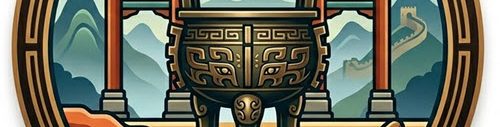

The Ming Tombs, known in Chinese as Ming Shisan Ling (明十三陵), form one of the most significant imperial burial complexes in China. Located approximately 50 kilometers northwest of central Beijing, near the foot of the Tianshou Mountains, the site contains the mausoleums of thirteen emperors of the Ming dynasty (1368–1644), along with numerous empresses, concubines, and royal family members. Constructed over more than two centuries, the complex reflects the political stability, economic power, cosmological beliefs, and architectural sophistication of the Ming era. In 2003, the Ming Tombs were inscribed as part of the UNESCO World Heritage Site “Imperial Tombs of the Ming and Qing Dynasties.”
Historical Background of the Ming Dynasty
The Ming dynasty was established in 1368 by Zhu Yuanzhang, who became the Hongwu Emperor after overthrowing the Mongol-led Yuan dynasty. His rise from peasant origins to imperial authority shaped many of the administrative and ideological foundations of Ming governance. The early Ming state emphasized agricultural recovery, tax reform, population registration, and the strengthening of centralized rule. These policies aimed to stabilize a country that had experienced prolonged warfare and demographic decline.
Under the Hongwu Emperor, the capital was initially established at Nanjing. However, his son Zhu Di, who ascended the throne as the Yongle Emperor after a civil conflict known as the Jingnan Campaign, transferred the capital to Beijing in 1421. This move reinforced northern defenses and consolidated the emperor’s political power. The relocation resulted in extensive construction projects, including the Forbidden City, new city walls, temples, and, significantly, an imperial burial complex near the capital.
Throughout the Ming period, imperial authority was expressed not only through governance but through ritual. In Confucian political philosophy, the emperor functioned as the Son of Heaven, mediating between cosmic and human realms. Death did not end this role; instead, ancestral worship ensured a continued symbolic presence. The construction of elaborate tombs was therefore an integral component of dynastic continuity and legitimacy.
Evolution of Imperial Burial Traditions
The Ming Tombs did not emerge in isolation. Chinese imperial burial practices evolved over centuries, drawing from traditions established during earlier dynasties such as the Han and Tang. Monumental earthen mounds, underground palaces, and spirit avenues had long been associated with imperial graves. The Ming synthesis incorporated these earlier models while standardizing layout and architectural vocabulary.
While the first Ming emperor was buried in Xiaoling near Nanjing, the decision to relocate the capital to Beijing required a new northern necropolis. The Yongle Emperor’s choice to establish the burial ground at Tianshou Mountain signified a permanent shift of political gravity to the north. Subsequent emperors reaffirmed this decision by constructing their own mausoleums within the same valley, creating a unified dynastic landscape.
Selection of the Site and Feng Shui Principles
The Yongle Emperor personally selected the burial site in 1409. The decision followed consultation with geomancers and court officials skilled in feng shui, the traditional Chinese system of geomancy concerned with harmonizing built environments with natural forces. According to geomantic principles, an ideal burial site should be sheltered by mountains behind it and open toward water or plains in front, creating a configuration sometimes described as a protective embrace.
The southern foothills of the Tianshou Mountains fulfilled these requirements. A crescent-shaped ridge extends across the northern boundary, serving as a natural barrier against harsh winds. In front of the valley lies an expansive plain that gently slopes southward toward Beijing. This alignment was interpreted as auspicious, offering protection and ensuring prosperity for descendants.
Geomantic theory also emphasizes orientation along a north–south axis. In traditional cosmology, the north represented stability and authority, while the south signified openness and vitality. By positioning the tombs to face south, planners aligned the deceased emperor with the same orientation used in palace architecture, symbolically affirming his continued rule in the afterlife.
Overall Layout of the Necropolis
The Ming Tombs complex covers approximately 120 square kilometers. Within this area are thirteen principal mausoleums, as well as auxiliary tombs for imperial consorts and princes. Although each mausoleum differs in detail, they follow a consistent structural plan based on axial symmetry and hierarchical sequencing.
The approach to the tombs begins with a ceremonial pathway known as the Sacred Way, or Shen Dao. This processional route serves as both entrance and symbolic transition from the secular world to a sacred landscape. The Sacred Way establishes a shared axis for the entire complex before diverging toward individual tomb enclosures.
Each mausoleum typically includes a front gate, a stele pavilion housing a commemorative inscription, a series of courtyards, and a sacrificial hall leading toward a circular burial mound. The systematic repetition of these features demonstrates adherence to ritual requirements codified in Ming court regulations.
The Sacred Way and Stone Statuary
The Sacred Way extends for approximately seven kilometers. It begins at the Great Red Gate and passes through monumental structures before reaching the branching paths that lead to individual tombs. The route was designed for funeral corteges and periodic commemorative rituals conducted by court officials.
Among its most recognizable features are the pairs of stone statues lining the avenue. These include lions, camels, elephants, horses, and the mythical qilin. The animals are arranged both standing and kneeling, symbolizing vigilance and service. Stone representations of civil and military officials follow, carved with detailed robes and formal postures. Their presence signifies continued bureaucratic order in the emperor’s afterlife retinue.
A prominent structure along the route is the Stone Archway, constructed in 1540 during the reign of the Jiajing Emperor. Carved from white marble, it features intricate relief decorations and multiple supporting columns. The archway demonstrates advanced stone-carving techniques and reflects the ceremonial grandeur associated with state ritual.
Changling: The Mausoleum of the Yongle Emperor
Changling is the largest and earliest tomb in the complex, setting the precedent for subsequent constructions. Built for the Yongle Emperor, construction began in 1409 and concluded in 1424. The site occupies a central position within the valley, underscoring the emperor’s role in establishing the necropolis.
The complex features a sequence of courtyards leading to the Ling’en Hall, the principal sacrificial structure. Raised on a three-tiered marble terrace, the hall contains massive nanmu wood columns that support a heavy roof of yellow glazed tiles. Nanmu timber, valued for its durability and resistance to decay, was transported from distant forests in southwestern China, reflecting extensive logistical organization.
Behind the hall stands the circular burial mound enclosed by a walled perimeter known as the “Precious City.” Beneath the mound lies the underground palace where the emperor and his empress are interred. Although unexcavated, historical documents describe the chamber as containing lacquered coffins, ritual objects, and precious materials intended to serve the emperor in the afterlife.
Dingling and Twentieth-Century Excavation
Dingling, the tomb of the Wanli Emperor, was constructed between 1584 and 1590. The project required substantial financial resources during a period when state expenditures were already strained. Dingling is notable for being the only Ming imperial tomb subjected to full archaeological excavation.
Excavations conducted from 1956 to 1958 revealed an underground palace consisting of five interconnected chambers built from precisely cut stone blocks. Within these chambers, archaeologists discovered silk garments, jade ornaments, gold crowns, porcelain vessels, and wooden coffins. The excavation provided valuable information about imperial burial practices and artisanal production techniques.
However, exposure to air and changes in humidity led to deterioration of several artifacts, particularly textiles. The experience prompted a reassessment of excavation policies in China. Authorities concluded that preserving unopened tombs often offers greater protection than invasive investigation, and since that time, other Ming tombs have remained sealed.
Other Mausoleums in the Complex
In addition to Changling and Dingling, the complex contains numerous other mausoleums, each reflecting the historical context of its construction. Zhaoling, the tomb of the Longqing Emperor, has undergone restoration and is accessible to visitors. Its architectural arrangement follows established norms, though on a more modest scale than Changling.
Siling, the burial place of the Chongzhen Emperor, occupies a distinct position within the necropolis. Chongzhen ruled during the dynasty’s final crisis and died in 1644 as rebel forces entered Beijing. His tomb lacks the grandeur of earlier structures, illustrating the weakened financial and political conditions of the late Ming state.
Other tombs—including Xianling, Jingling, Yuling, Maoling, Tailing, Kangling, Yongling, and Deling—demonstrate variations in scale and ornamentation. Differences often correspond to the length of reign, economic stability, and administrative effectiveness of individual emperors.
Architectural Techniques and Materials
The construction of the Ming Tombs required extensive coordination of labor and materials. Foundations were stabilized through compacted earth and stone platforms. Wooden frameworks employed interlocking bracket systems known as dougong, capable of distributing weight without reliance on nails. This method enhanced structural resilience and flexibility.
White marble terraces and balustrades were quarried and transported over considerable distances. Roofs were covered in glazed ceramic tiles, predominantly yellow, a color reserved for imperial usage. Decorative ridge ornaments often featured dragons, symbolizing authority and cosmic power.
The underground chambers were engineered to support substantial earthen mounds. Barrel-vaulted ceilings and arch structures distributed pressure evenly. Massive stone doors sealed the entrances, sometimes weighing several tons. These engineering solutions ensured durability and security against looting.
Ritual Practices and Dynastic Legitimacy
After burial, emperors were venerated through scheduled rites conducted by court officials. Offerings of food, silk, incense, and ceremonial vessels were presented at the sacrificial halls. The rites adhered to detailed prescriptions recorded in administrative codes, reinforcing hierarchical relationships between the living ruler and his ancestors.
These ceremonies also functioned as political statements. By honoring previous emperors, the reigning monarch demonstrated filial piety and affirmed legitimate succession. Even after the Ming dynasty fell, Qing emperors continued to perform rituals at the Ming Tombs to strengthen their own claims to rule over China.
Preservation and Heritage Management
Over centuries, natural weathering, theft, and political upheaval affected the site. Restoration initiatives in the twentieth century sought to stabilize wooden structures, replace damaged tiles, and reinforce foundations. Conservation policies increasingly prioritize scientific monitoring, environmental control, and limited intervention.
The 2003 designation as part of a UNESCO World Heritage Site recognized the Ming Tombs as an outstanding example of imperial funerary architecture. Preservation strategies now involve collaboration among historians, archaeologists, engineers, and conservation specialists to ensure long-term stability.
Cultural and Symbolic Significance
The Ming Tombs embody principles central to traditional Chinese cosmology. The axial arrangement reflects an ordered universe centered on imperial authority. The combination of mountains, plains, and constructed forms integrates natural and human elements into a unified ritual landscape.
The circular burial mound represents heaven, while rectilinear courtyards symbolize earth, illustrating the ancient concept of harmony between cosmic forces. Stone guardians along the Sacred Way convey protective and moral symbolism, reinforcing the enduring authority of the dynasty.
Modern Tourism and Continuing Research
Today, selected tombs are open to visitors, including Changling, Dingling, and Zhaoling. Interpretive exhibitions present archaeological findings and historical context. Visitor access is managed to reduce structural stress and environmental impact.
Ongoing scholarly research continues to examine construction records, ritual manuals, and material remains. Advances in non-invasive technology, such as ground-penetrating radar and environmental sensors, offer new possibilities for studying sealed chambers without compromising preservation.
The Ming Tombs remain a comprehensive testament to the administrative organization, artistic achievement, and cosmological frameworks of the Ming dynasty. Through sustained conservation and research, the site continues to inform academic understanding of imperial China while maintaining its historical integrity.
